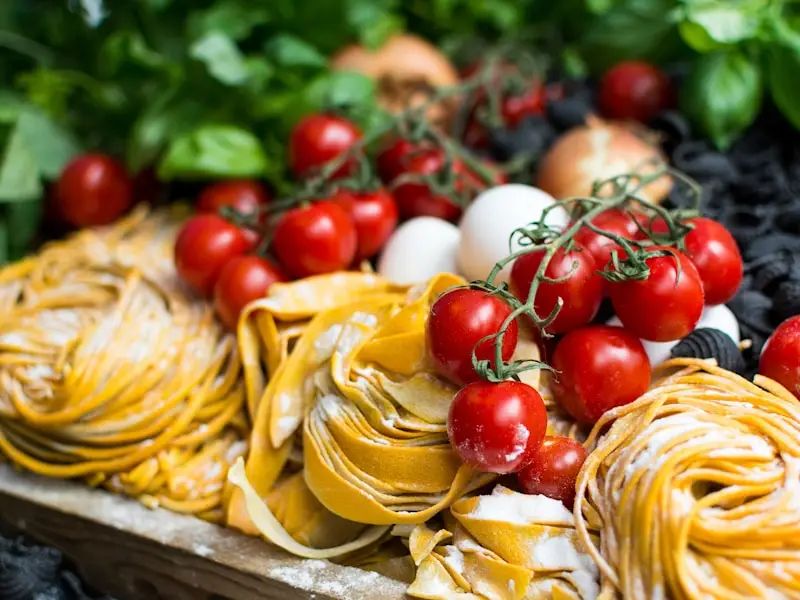
A gastronomic journey for lovers who believe food is its own love language
In Italy, food is not merely sustenance. It is philosophy, identity, religion, and—most crucially for our purposes—romance. The Italians understood long before anyone coined the phrase "love language" that the way to someone's heart quite literally travels through the stomach. A honeymoon in Italy built around food is not, therefore, an exercise in gluttony but an exercise in intimacy, a chance to share not just meals but experiences that will become part of your shared mythology as a couple.
What follows is a gastronomic itinerary designed for couples who believe that reservations at a legendary restaurant are as important as views of the Colosseum, that learning to make pasta together is as romantic as any sunset, and that the perfect honeymoon includes both Michelin stars and markets, cooking classes and cantinas.
Bologna: Where the Education Begins
Every culinary honeymoon in Italy should begin in Bologna, the city the Italians themselves call "La Grassa"—the fat one. This is a city that takes food so seriously that it has built its entire identity around the pleasure of eating well. Here, the tortellini are said to be modeled on Venus's navel, the ragù recipe has been officially registered with the Chamber of Commerce, and elderly nonnas still make sfoglia—hand-rolled pasta sheets—so thin you could read a love letter through them.
Book a morning at FICO Eataly World if you want an overview of Italian food culture, but for the real experience, lose yourself in the Quadrilatero market district. This labyrinth of narrow streets has been Bologna's food heart since the Middle Ages. Visit Tamburini, a temple to salumi where mortadella is sliced paper-thin from whole legs hanging overhead. Duck into Atti for the city's finest tortellini, made fresh each morning by a team of sfogline who've been rolling pasta for decades.
In Bologna, every meal tells a story, every recipe carries centuries of wisdom, and every bite is an act of love.
For dinner, secure a table at Francescana, if you can—Massimo Bottura's three-starred temple to modern Italian cuisine is one of the world's great restaurants. But don't overlook the city's traditional trattorias either: Trattoria Battibecco or Da Cesari serve the classics with the kind of confident simplicity that only comes from generations of practice.
Before leaving Bologna, book a private pasta-making class. Learning to make tortellini together—the careful folding, the practiced pinch—creates a shared skill you'll carry home. Years from now, you'll stand in your own kitchen shaping these little parcels, and the memory of that sun-drenched morning in Emilia-Romagna will return with every fold.
Modena and Parma: The Territory of Treasures
From Bologna, venture into the heart of Italy's most storied food territory. This is the land of Parmigiano-Reggiano and Prosciutto di Parma, of traditional balsamic vinegar aged for decades in attic acetaias, of lambrusco that sparkles and satisfies in ways that champagne envy cannot touch.
In Modena, arrange a visit to a traditional balsamic vinegar producer. Not the supermarket stuff—true Aceto Balsamico Tradizionale di Modena, aged for a minimum of twelve years and often much longer. Watch as your host draws samples from barrels of different ages, explaining how the product concentrates and transforms over decades. The oldest vinegars, thick as syrup and complex as fine wine, are served by the drop over strawberries or Parmigiano—a tasting experience unlike any other.
Continue to Parma for prosciutto. A visit to a curing house in Langhirano, where the hillside air does its ancient magic, is a lesson in patience and tradition. The best producers cure their hams for twenty-four months or more, checking progress by inserting a horse-bone needle and sniffing. Book lunch at Ristorante Cocchi for classic Parmesan cuisine, where every dish showcases local ingredients with unpretentious mastery.
Piedmont: The Truffle Kingdom
If your honeymoon falls between October and December, Piedmont becomes essential. This is white truffle season in Alba, when the town's famous tartufi bianchi perfume restaurants and markets, when prices reach stratospheric heights, and when the discerning traveler can experience one of food's most profound pleasures.
Join a truffle hunt in the hills around Alba, following a trifolau and his trained dog through misty morning woods. The thrill when the dog begins to dig, the anticipation as the hunter carefully excavates, the musky, otherworldly aroma of a fresh truffle emerging from the earth—these are moments that transcend ordinary tourism.
For the ultimate truffle experience, book dinner at Piazza Duomo, where chef Enrico Crippa showcases the ingredient with the reverence it deserves. Or opt for the more rustic pleasures of Trattoria della Posta in Monforte d'Alba, where tajarin al tartufo bianco—thin egg noodles buried under shaved truffle—delivers pure, unadorned bliss.
The white truffle announces itself before you see it—an aroma that manages to be earthy and ethereal, humble and transcendent, all at once.
Naples and the Amalfi Coast: Where Pizza Becomes Poetry
After the refinement of the north, Naples provides glorious, chaotic contrast. This is where pizza was born, where the volcanic soil of Vesuvius produces tomatoes of startling intensity, where street food is elevated to art form and every meal comes with a side of theatre.
The pizza pilgrimage is mandatory. Start at L'Antica Pizzeria da Michele, where only two varieties are offered and neither needs improvement. Experience the blistered, leopard-spotted crust, the molten mozzarella di bufala, the San Marzano tomatoes that somehow taste more tomato-ish than any tomato you've known. Then work your way through Sorbillo, Starita, Di Matteo—each pizzaiolo with their own philosophy, their own perfect char.
But Naples offers far more than pizza. Wander through the Pignasecca market, where stalls overflow with seafood so fresh it still twitches, with vegetables the colours of jewels, with sfogliatelle crisp from the oven. Learn to eat cuoppo, a paper cone of fried delights, while walking the chaotic streets. Book dinner at Don Alfonso 1890 in nearby Sant'Agata for Michelin-starred coastal cuisine that draws on centuries of Campanian tradition.
Sicily: The Island of Contrasts
Sicily's cuisine reflects its complex history—Arab sweetness, Spanish richness, Greek simplicity, Norman abundance all layered together over centuries. This is where pasta meets sardines and wild fennel, where aubergines and capers and almonds conspire in caponata, where granita for breakfast is not merely acceptable but encouraged.
In Palermo, join a street food tour through the chaotic Ballarò market. Steel yourself for pani ca' meusa—spleen sandwiches that taste far better than they sound—and arancine, those golden fried rice balls that crisp and ooze and satisfy. In Catania, on the island's eastern coast, the fish market astounds: swordfish the size of small cars, sea urchins split open to reveal orange treasure, tuna so fresh it shimmers.
The sweet side of Sicily cannot be ignored. At Maria Grammatico's shop in Erice, buy marzipan fruits so realistic you'll hesitate before biting. In Modica, taste chocolate made by an ancient cold-process method brought by the Spanish from Mexico. In Noto, queue at Caffè Sicilia for granita di mandorla and brioche, the breakfast of Sicilian dreams.
Sicilian food is archaeology on a plate—layers of history you can taste, centuries of influence blended into something wholly unique.
Rome: The Eternal Appetite
End your culinary honeymoon in Rome, where the food is as eternal as the city itself. Roman cuisine is fundamentally honest: offal and artichokes, carbonara and cacio e pepe, dishes that have been made the same way in the same trattorias for generations. This is not a city for culinary innovation but for culinary tradition at its most satisfying.
For carbonara, the endless debate between Roscioli, Da Enzo, and Felice a Testaccio could consume your entire stay. Embrace it—eat carbonara for lunch three days running, comparing notes, developing strong opinions. The dish is simple on paper—guanciale, egg, pecorino, pepper—but the execution varies wildly, and finding your favourite becomes a delicious obsession.
Don't miss the Jewish Ghetto, where carciofi alla giudia—whole artichokes fried until crisp as chips—have been a specialty for centuries. Book dinner at Pierluigi for seafood in a piazza setting, or Armando al Pantheon for the platonic ideal of Roman comfort food. And on your final morning, queue at Sant'Eustachio for what may be the world's finest espresso, served the same way since 1938.
The Art of Eating Together
A food-focused honeymoon in Italy is about more than eating well, though you certainly will. It's about establishing rituals that can sustain a marriage: the morning market run, the leisurely lunch, the aperitivo hour that stretches into dinner. It's about learning to cook together, to taste together, to develop a shared vocabulary of flavour and pleasure.
The meals you share in Italy will fade into memory, but the patterns you establish will endure. The habit of lingering over dinner, of valuing quality over quantity, of treating food as an occasion for connection rather than mere fuel—these are gifts that a culinary honeymoon offers. Take them home with you. Let them shape the life you build together. And when, years from now, you roll out pasta dough in your own kitchen or uncork a Barolo on your anniversary, you'll taste not just the wine but the memory of falling in love, one bite at a time.