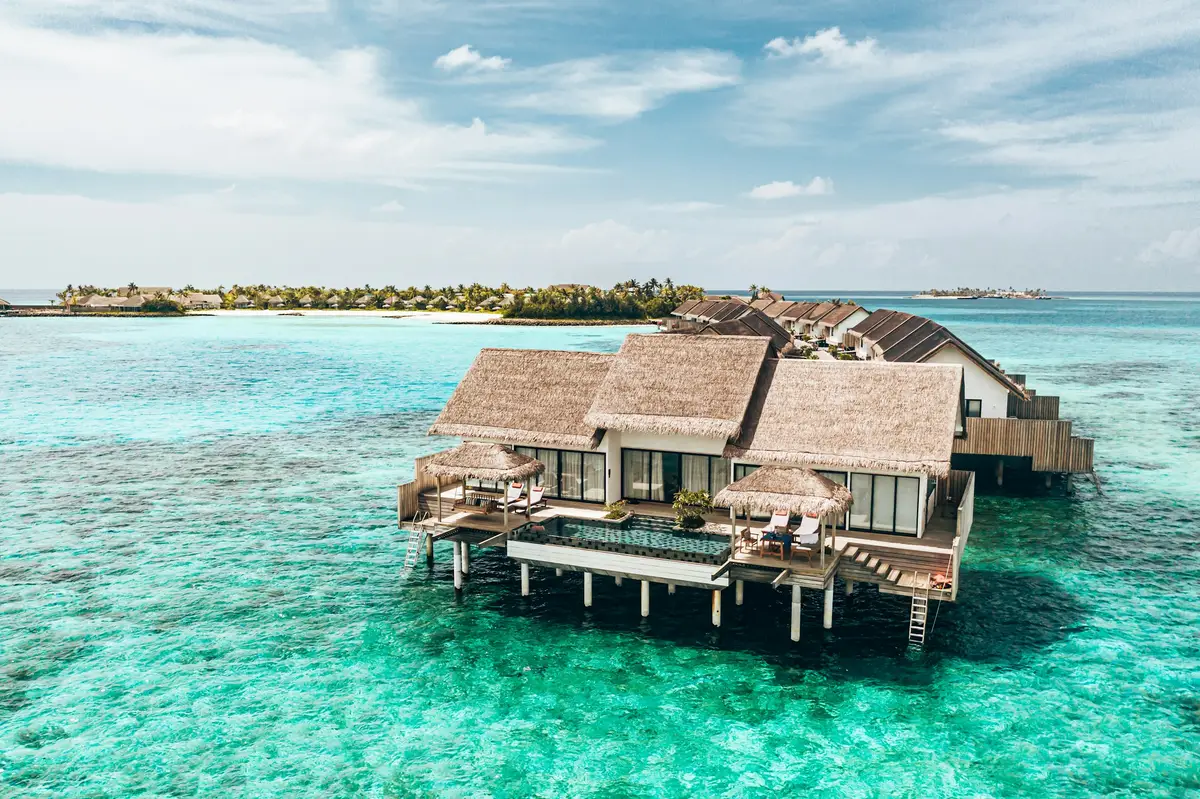
From the Maldives to Bora Bora, overwater villas represent the pinnacle of honeymoon accommodation. Here's how to choose the right one for you.
The overwater villa has become the defining image of the luxury honeymoon—those thatched-roof bungalows perched above impossibly blue lagoons, reached by wooden jetties, surrounded by nothing but water and sky. First pioneered in French Polynesia in the 1960s, the concept has spread across the tropics, with each destination adding its own interpretation. Today, overwater villas represent the apex of romantic accommodation, offering privacy, natural beauty, and the simple magic of sleeping above the sea.
Yet the category has become so popular—and so varied—that choosing the right overwater villa requires genuine research. The differences between destinations, resorts, and villa categories can dramatically affect your experience and value. This guide provides the comprehensive overview you need to make an informed choice.
The Maldives: Volume and Variety
The Maldives has become synonymous with overwater living, and for good reason. The archipelago's geography—low-lying islands surrounded by shallow lagoons—creates ideal conditions for overwater construction. With over 150 resorts competing for discerning honeymooners, the variety of overwater offerings here exceeds anywhere else on Earth.
Maldivian overwater villas typically extend from islands via jetties, with the best positions offering sunrise or sunset views depending on orientation. The entry-level category—"water villa" in most resort nomenclature—provides direct lagoon access, private decks, and the essential overwater experience at relatively accessible prices. Moving up, "water villa with pool" adds a private plunge or infinity pool, transforming your villa into a self-contained aquatic retreat.
The top categories approach private residences: multi-bedroom overwater pavilions with dedicated staff, private chefs, wine cellars, and space measured in thousands of square metres. Velaa Private Island's overwater residences include private marinas; Soneva Fushi's Water Retreats feature retractable roofs for stargazing. At this level, the overwater villa becomes less a hotel room than a private estate floating above the sea.
Key considerations in the Maldives include house reef access—some overwater villas position you directly above excellent snorkeling while others overlook sandy lagoons—and jetty position. Villas at jetty ends offer maximum privacy; those mid-jetty may hear neighbors coming and going. Ask specifically about orientation, neighbors, and reef proximity when booking.
"In the Maldives, the overwater villa isn't an amenity—it's the entire point, the reason for the journey, the foundation of the honeymoon experience."
French Polynesia: The Original and Best?
The overwater bungalow was invented in Tahiti, and many connoisseurs still consider French Polynesia the category's spiritual home. The Society Islands—particularly Bora Bora, Moorea, and Taha'a—offer overwater experiences with two key advantages over the Maldives: dramatic volcanic backdrops and significantly more varied marine life.
Bora Bora remains the iconic destination. The view from an overwater bungalow across the lagoon to Mount Otemanu is one of travel's defining images, and properties like Four Seasons Bora Bora and Conrad Bora Bora Nui have refined the overwater experience to remarkable degrees. The lagoon here is protected by a barrier reef that creates ideal conditions—calm, clear water in every shade of blue.
Moorea offers a wilder, less developed alternative just 30 minutes by ferry from Tahiti. The Hilton Moorea and Sofitel Moorea deliver authentic overwater experiences at somewhat lower price points, while the island's interior provides genuine exploration opportunities—hiking, waterfalls, pineapple plantations—unavailable in the more manicured Bora Bora.
The French Polynesian overwater experience differs subtly from the Maldivian. Construction tends toward traditional materials—thatched roofs, natural wood—rather than the contemporary materials increasingly common in the Maldives. The villas are often smaller but arguably more romantic, designed for intimacy rather than grandeur. And the marine life beneath your bungalow typically includes rays, sharks, and tropical fish in greater variety than Maldivian lagoons.
Emerging Destinations: Beyond the Established
As the overwater concept has proven its appeal, destinations worldwide have begun constructing their own interpretations. Some of these emerging options offer excellent value and experiences unavailable in the traditional strongholds.
Malaysia's Borneo has embraced overwater hospitality, with properties like Gayana Marine Resort and Pom Pom Island Resort offering overwater villas on the edge of the Coral Triangle—the world's most biodiverse marine region. The snorkeling and diving here exceed almost anywhere, with pricing significantly below Maldivian equivalents.
The Caribbean has been slower to adopt overwater accommodation—regulations often restrict building over water—but properties like Sandals in Jamaica and St. Lucia now offer the style in the Western Hemisphere. The villas lack the crystalline waters of the Indian Ocean but eliminate the long-haul flight for American and European travelers.
Cambodia's Song Saa Private Island proved that overwater villas could work in Southeast Asian waters, combining Cambodian hospitality with conservation focus. Vietnam, Thailand, and the Philippines are all developing overwater properties as the concept spreads across Asia.
"The overwater villa concept travels well—what matters is not where you are but what lies beneath, around, and before you."
Design and Features: What to Look For
Not all overwater villas are created equal. Understanding the features that differentiate good from exceptional helps you choose wisely within your budget.
Glass floor panels have become standard in quality overwater villas, allowing you to watch marine life from your living room or bedroom. The best implementations position panels in living areas rather than bedrooms—watching fish while relaxing on the sofa proves more practical than staring at the lagoon floor while trying to sleep.
Direct lagoon access matters more than you might expect. The ability to descend your villa's steps directly into snorkeling territory transforms the overwater experience. Some villas over sandy lagoons offer only swimming rather than reef access; others position you above coral gardens. Ask specifically about what you'll find beneath your villa.
Outdoor space defines how you'll live in your villa. Generous decks with comfortable lounging, overwater hammocks, outdoor showers, and private dining areas encourage you to spend time outdoors rather than retreating to air conditioning. The best overwater villas are designed for outdoor living with indoor climate control as backup.
Privacy varies dramatically between properties. Some jetty designs position villas quite close together; others space them for genuine seclusion. End-of-jetty positions generally offer maximum privacy but may require longer walks. Ask about spacing and sightlines before booking.
Practical Considerations
The overwater experience, for all its romance, comes with practical considerations worth understanding.
Accessibility can be challenging. Most overwater villas are reached via elevated jetties with steps; those with mobility concerns should confirm accessibility features. Some resorts offer beach-level overwater villas, but these are rare.
Noise carries over water differently than over land. Light sleepers may notice waves, boats, or even fish beneath the villa. Most find these sounds soothing; some don't. If you're sensitive to nighttime noise, consider whether the overwater experience truly suits you.
Weather affects overwater stays more than land-based accommodation. Rain sounds dramatic on thatched roofs; wind rocks poorly-anchored villas; storms can close jetties entirely. Most find this connection to weather romantic, but those seeking completely controlled environments may prefer beach villas.
Finally, consider whether you'll actually use the overwater features. If you don't snorkel, glass floor panels provide limited value. If you spend most days exploring elsewhere, the premium for overwater may not deliver commensurate enjoyment. The overwater villa rewards those who embrace it fully—lounging, swimming, snorkeling, simply being above the water. For couples who want a beautiful base for external adventures, a beach villa may actually serve better.
The Overwater Romance
Despite these practicalities, the overwater villa delivers something no other accommodation type can match. Waking to the sound of water, watching the sunrise paint the lagoon from your deck, descending steps into the sea for a morning swim, falling asleep to the gentle motion of the tide—these experiences create honeymoon memories of uncommon power.
The overwater villa removes you from the ordinary world. Suspended between sea and sky, you occupy a liminal space where normal rules don't apply, where days lose structure, where the only imperative is enjoyment. For couples beginning their married life, this removal from the everyday provides rare opportunity for connection, reflection, and shared wonder.
Choose your overwater villa with care—the destination, the resort, the specific category that matches your priorities and budget. Then let the experience work its magic. The overwater villa has earned its reputation as the ultimate honeymoon accommodation. Give it a few nights, and you'll understand why.