The Amalfi Coast, Cinque Terre, Tuscany—Italy's winding roads were made for honeymoon adventures.
There is something about Italy that seems purpose-built for lovers in automobiles. Perhaps it's the way the light falls golden across Tuscan hillsides at that perfect hour before dusk. Perhaps it's the winding roads that seem to conspire with romance, each bend revealing another impossibly picturesque village perched above valleys of silver-green olive groves. Or perhaps it's simply that Italy understands, better than anywhere else on earth, that the journey itself can be as intoxicating as the destination.
For honeymooners with a sense of adventure and an appreciation for la dolce vita, an Italian road trip offers something that resort holidays cannot: the freedom to chase beauty wherever it leads, to stop for an impromptu lunch at a trattoria discovered by accident, to watch the sunset from a clifftop you found only because you took the wrong turn at the right moment.
We've mapped out five routes that transform a simple drive into an unforgettable romantic odyssey. Each has been chosen not merely for its scenic credentials—though they are impeccable—but for the opportunities they provide for connection, discovery, and the kind of spontaneous magic that honeymoons deserve.
The Amalfi Coast: Italy's Most Legendary Drive
Let us begin with the obvious, because some clichés earn their status. The Amalfi Coast road, that serpentine ribbon of asphalt carved into vertiginous cliffs above an impossibly blue sea, remains the gold standard of romantic driving not because of its fame but despite it. Yes, you will encounter tour buses. Yes, the road is narrow enough to test even seasoned drivers. None of this matters when you round a corner and Positano tumbles into view, a cascade of pastel houses spilling down the mountainside like a painter's fever dream.
The secret to the Amalfi Coast is pace. Do not attempt to drive from Sorrento to Salerno in a single ambitious morning, stopping only for photographs. Instead, choose Ravello as your base—a village set high above the coast where the famous gardens of Villa Cimbrone offer views that Gore Vidal once called the most beautiful in the world. From this peaceful perch, you can descend to the coast at leisure, exploring Amalfi's Arab-Norman cathedral and Atrani's tiny beach, returning each evening to terraced gardens and infinite horizons.
The road itself becomes your companion, each curve a small revelation, each village a chance to fall deeper in love with both your partner and with Italy itself.
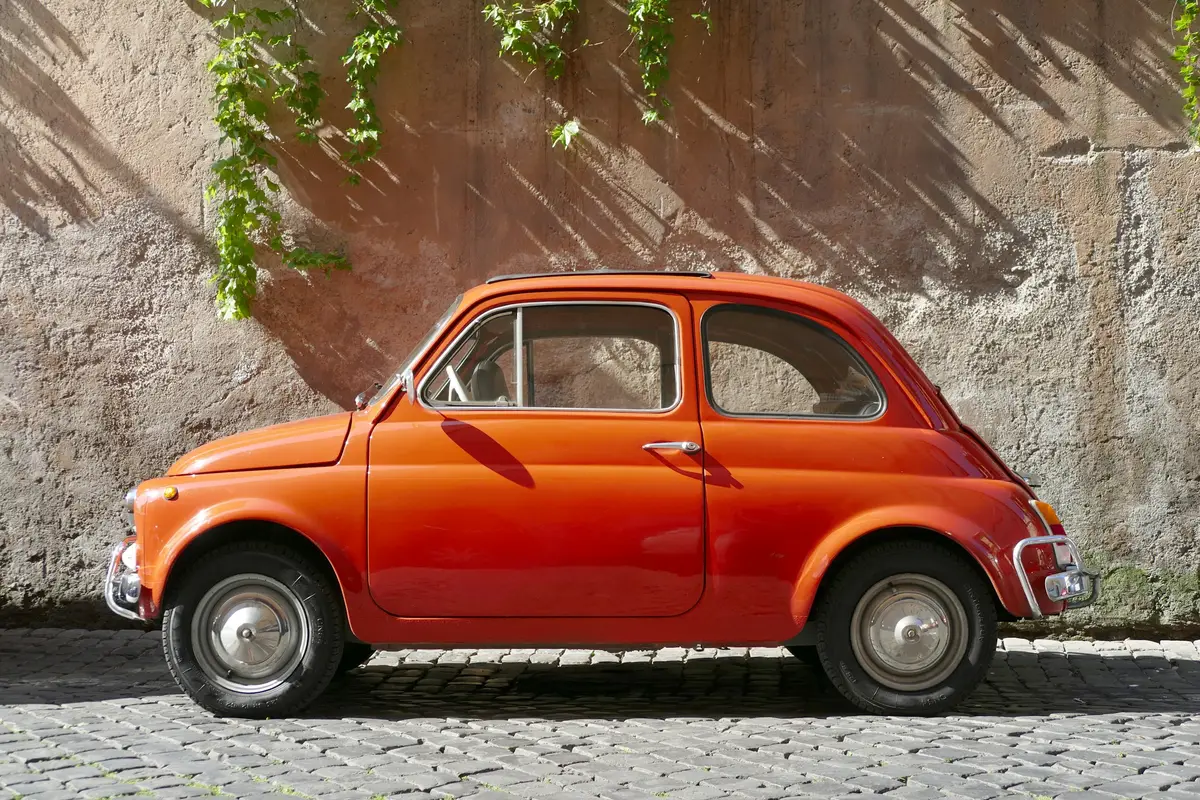
Practical considerations: rent a small car, ideally a Fiat 500 in a cheerful colour, which will prove invaluable on hairpin turns. Book a table at Don Alfonso 1890 in Sant'Agata sui Due Golfi for at least one extraordinary meal. And whatever you do, drive this route in the late afternoon, when the light turns the sea to molten gold and the day-trippers have retreated to their hotels.
Tuscany's Val d'Orcia: The Landscape of Dreams
If the Amalfi Coast is drama, the Val d'Orcia is poetry. This UNESCO-protected valley in southern Tuscany is the landscape you imagined when you first dreamed of Italy: rolling hills arranged in perfect waves, lone cypress trees standing sentinel on ridgelines, medieval towns crowning distant peaks. It is a landscape that seems almost too beautiful to be real, as though someone had refined Tuscany to its Platonic ideal.
The beauty of driving through the Val d'Orcia lies in its gentleness. There are no white-knuckle cliff roads here, no death-defying drops. Instead, you meander through a landscape that seems to slow time itself. Stop in Pienza, the "ideal Renaissance city" built by a Pope who wanted to create perfection in stone. Walk its tiny centro storico, taste its famous pecorino cheese, and watch the light change over the valley from Piazza Pio II.
Continue to Montalcino, where some of Italy's greatest wines are born. Book a tasting at Biondi-Santi or Casanova di Neri, where you can sample Brunello while gazing across the very vineyards that produced it. For lunch, seek out a farmhouse serving ribollita and wild boar ragù, the kind of place with no sign and only a handful of tables, where the owner's grandmother still makes pasta by hand.
The Italian Lakes: Where Alps Meet Elegance
The lakes of northern Italy—Como, Maggiore, Garda, and little-visited Orta—offer a road trip that combines Alpine grandeur with Mediterranean sophistication. This is the Italy of grand hotels with legendary guest books, of gardens that cascade down hillsides in explosions of azalea and camellia, of George Clooney and the Rockefellers and centuries of aristocratic escapism.
Begin at Lake Orta, the smallest and most intimate of the great lakes. Stay at Villa Crespi, a Moorish fantasy of turrets and arabesques that houses one of northern Italy's finest restaurants. From here, wind your way to Lake Maggiore and the Borromean Islands, those jewel-box gardens floating in the blue water like something from a fairy tale.
The drive along Lake Como's western shore is one of Europe's most beautiful, threading through villages where bougainvillea tumbles over stone walls and grand villas peek through cypress groves. Stop at Bellagio, the "pearl of the lake," where the promontory divides the lake into its distinctive Y-shape. Have lunch at the Grand Hotel Villa Serbelloni's terrace, watching the ferry boats trace their lazy routes across the water.
At the lakes, la dolce vita isn't just a philosophy—it's the local religion, practiced with devotion at every waterfront café and terraced garden.
Sicily's Baroque Triangle: Sun, Stone, and Sea
Sicily demands a different kind of road trip—one fueled by espresso and granita, by the afternoon passeggiata, by a rhythm dictated by heat and history. The island's southeast corner, devastated by an earthquake in 1693 and rebuilt in exuberant Baroque style, offers perhaps Italy's most underrated driving experience: a journey through honey-coloured towns where every church façade is a symphony in stone.
Base yourself in Noto, the so-called "Stone Garden," where the evening light turns the Baroque buildings to burnished gold. Drive to Ragusa Ibla, a town that appears to tumble down its hillside in a cascade of domes and campaniles. Explore Modica, where the chocolate shops sell an ancient Aztec-style preparation brought by the Spanish centuries ago. Swim at Marzamemi, a fishing village so atmospheric it has appeared in countless films.
The roads here are quieter than in the north, the landscape more austere—dry stone walls, ancient olive groves, the distant shimmer of the Mediterranean. But the romance runs just as deep, perhaps deeper, in a land where Greek temples still stand and the sea is never far from view.
Piedmont's Wine Roads: A Connoisseur's Romance
For couples who believe that the truest path to the heart runs through the palate, Piedmont's Langhe region offers Italy's most gastronomically rewarding road trip. This is the land of Barolo and Barbaresco, of white truffles and hazelnut-studded chocolate, of Slow Food and Michelin stars hidden in medieval villages.
The landscape here is a patchwork of vineyards, each precisely terraced hillside producing wines of remarkable specificity. One village's Barolo tastes of roses and tar; the next, a mere kilometre away, hints at cherries and dried herbs. Driving through the Langhe during October's truffle season, when the mists rise from the valleys and the vineyards blaze red and gold, is to experience Italy at its most sensually overwhelming.
Stay at Casa di Langa, a contemporary retreat set among the vines, or the more traditional Relais San Maurizio, a former monastery now dedicated to earthly pleasures. Book dinner at Piazza Duomo in Alba, where chef Enrico Crippa's vegetables-forward cuisine has earned three Michelin stars. Visit a cantina in Barolo village, tour the Ferrero chocolate factory in Alba, hunt for truffles with a local trifolau and his dog.
In Piedmont, every meal becomes a celebration, every glass of wine a love letter from the land that produced it.
Practical Notes for the Road
Italian road trips require some preparation, though less than you might fear. International driving permits are technically required but rarely checked. Most rental car companies offer automatic transmission now, though manual remains common—and honestly, more fun on winding roads. Consider renting a convertible; there is simply no better way to experience Italy's landscapes and scents. Book accommodations in advance during high season, but leave room in your itinerary for spontaneity.
The ZTL zones in historic centres can be confusing; these restricted traffic areas will result in fines if you enter without proper authorization. Most hotels can arrange permits, or simply park outside the centro and walk. Italian drivers may seem aggressive, but they're generally skilled; relax into their rhythm rather than fighting it.
Most importantly, remember that an Italian road trip is not about covering ground. It's about uncovering beauty, one bend at a time, with the person you love beside you and the whole of la bella Italia stretched out ahead.