Baku surprises. This Caspian Sea capital doesn't market itself as a romantic destination, yet couples find profound connection here. We follow one pair through fire temples, natural wonders, and three world-class restaurants that reframe what luxury means in unexpected places.
The plane drops through cloud cover and the first thing that reaches you isn't a sight. It's a smell. Sulfur, faint and mineral, drifting up from the Caspian basin before Heydar Aliyev Airport even appears below. Baku announces itself through the nose before the eyes catch up.
My husband gripped my hand on the descent, not from fear but from the particular disorientation of arriving somewhere with no template. We'd read about Bali's rice terraces and Capri's cliffs a hundred times before landing there. Baku offered no such rehearsal. Glass towers rose beside Soviet apartment blocks the color of wet concrete, and past them, glowing even at 3pm, the three curved silhouettes of the Flame Towers. Nobody had prepared us for this collision. That was the point.
Key takeaways
- Visit October-November or April-May for 60-75°F days and clear dusk skies over the Flame Towers; summer hits 90°F+ and winter turns gray.
- Plan 4-5 nights minimum: two days for the Old City and modern districts, one full day for Gobustan's 400+ mud volcanoes (50km, 90 minutes each way), and evenings free for Flame Towers views.
- Book Michelin-starred tables like Les Ambassadeurs by Christophe Cussac 2-3 months ahead; Old City meals need no reservation at all.
- Metro rides cost under $0.05; hire a private driver only for the Gobustan excursion.
- Azerbaijani Manat (AZN) is the local currency, though USD and EUR move easily through luxury venues.
Night one: caviar as translation
Our first dinner happened to be at Les Ambassadeurs by Christophe Cussac, the two-Michelin-starred dining room that has become shorthand, among the region's frequent travelers, for what happens when Azerbaijan's oil wealth meets European technique. We ordered the sea bream crowned with caviar almost on instinct, the way you order the dish a menu seems built around.
The caviar arrived not as garnish but as argument: this is what abundance tastes like when it comes from your own coastline instead of a Fabergé egg shop. One review calls the evening "pure gastronomic magic," and I understand the impulse toward hyperbole now, though I'd put it more plainly. The lobster lasagne, laced with tarragon and spinach, tasted like restraint dressed as excess. Our waiter, trained under chef Christophe Cussac's exacting service standards, refilled water glasses without once interrupting conversation, the kind of attentiveness that reads as care rather than performance.
Neither of us grew up eating caviar. That first spoonful felt like showing off, until we realized: this is simply what's local here. The extravagance was ours, not the region's.
The Flame Towers at midnight
We walked the hillside path toward the towers around 11pm, past a handful of teenagers on skateboards and nobody else. Three towers, each 165 meters, tiled in LED screens that cycle between flame patterns and the Azerbaijani flag. The Caspian caught the light and threw it back in broken pieces.
There was no crowd to navigate, no vendor selling selfie sticks. Just us, the wind carrying a trace of that same sulfur smell from the airport, and a city built on three collapsed timelines: Zoroastrian fire worship, Soviet industrial ambition, and a government determined to announce itself through architecture.
Baku doesn't ask you to admire it from a designated viewpoint. It just leaves the door open and assumes you'll notice.
Gobustan: the ground that breathes
Fifty kilometers southeast, past scrubland the color of dried tobacco, we reached Gobustan's mud volcanoes. Azerbaijan holds more than 400 of the world's roughly 1,000 known mud volcanoes, and they don't erupt so much as murmur, small bubbles surfacing and popping with a sound like a pot left too long on low heat.
I waded in first. The surface felt warm, almost body temperature, but three inches down the mud turned cold and slick, mineral-heavy against the skin. My husband followed, wincing, and we stood there laughing at the absurdity of two people in their honeymoon clothes covered in gray sediment. It's a strange kind of intimacy, standing in something the earth is actively producing, no schedule, no performance, just geology doing what it does.
The Old City: touch over spectacle
Inside Icherisheher, the walled Old City, streets narrow enough that our shoulders brushed both sides at once. We got lost deliberately, running palms along walls that have stood since the 12th century, stone worn smooth in places by centuries of hands doing exactly this.
A carpet weaver working near the Maiden Tower waved us into her workshop. She placed my fingers on the loom and guided them through three knots before letting go. My rhythm was clumsy; hers had decades behind it. It struck me that romance doesn't require a sommelier or a tasting menu. Sometimes it's just two strangers' hands finding a stranger's craft together.
Night two: opera between courses
Weeks later, back home, we'd laugh about how quickly we adjusted to European fine dining showing up in unlikely coordinates. But our second dinner, at Bel Canto Paris - Hotel de ville, taught us something else: Baku's luxury culture doesn't hide its European borrowings, it performs them, loudly and without apology.
A soprano moved between tables singing Puccini while we ate veal cooked, as one reviewer put it, "to perfection." The quartet, soprano through baritone, treated the arias not as background music but as another course, timed between the entrée and dessert. One couple near us got engaged mid-meal; the whole room applauded without missing a lyric. It felt staged and completely unstaged at once, which might be the actual definition of theater done well.
Fire temples, glass malls, no contradiction
We visited Ateshgah Fire Temple at dusk, watching natural gas flames flicker inside stone alcoves where Zoroastrian pilgrims once worshipped fire seeping from the earth itself. Twenty minutes later we sat on a rooftop bar overlooking those same Flame Towers, cocktails in hand, shopping bags from a glass-fronted mall at our feet.
Nobody in Baku seems bothered by this whiplash. It's just Tuesday.
Night three: caviar, understood
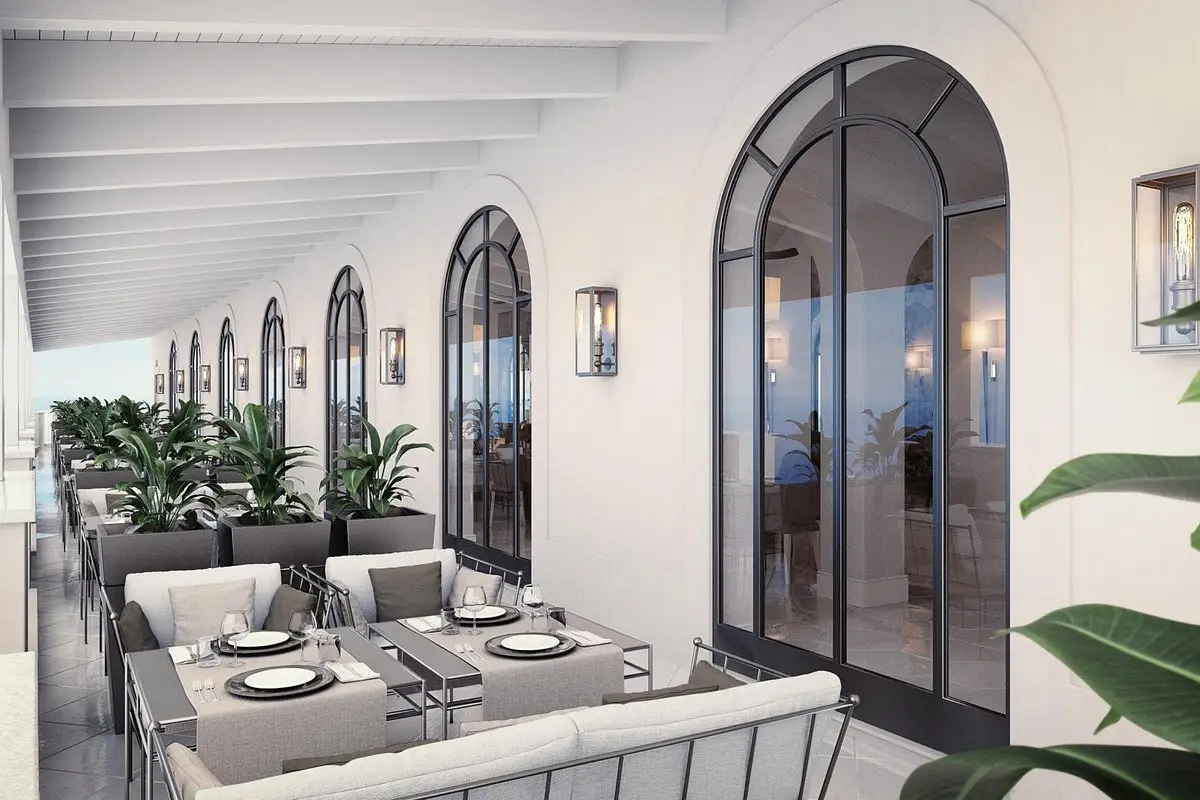
Our final dinner took us far from Azerbaijan geographically but close to it in spirit: Bluh Furore, the Michelin-starred Campanian restaurant we'd chosen almost as an experiment. Executive chef Vincenzo Russo, trained under three-Michelin-starred Enrico Bartolini, builds tasting menus around ingredients from the region surrounding the restaurant, and the caviar cannolo that opened our meal no longer felt foreign to us. Three nights earlier it would have.
The Mediterranean stretched below the dining room, and I understood, finally, that this honeymoon wasn't about any single location. It was about the transitions between them: sulfur to caviar, mud to opera, stone walls to glass towers.
What Baku teaches about romance
At the airport, waiting for our flight home, my husband said something I keep returning to: Baku never tried to be romantic for us. We had to make it romantic ourselves, out of mud and fire and a stranger's loom.
That absence of ready-made infrastructure, the missing honeymoon packages and sunset cruise brochures, forced a different kind of attention. Luxury here isn't comfort handed to you. It's noticing what's already extraordinary and choosing to stay present for it.
Recreating the experience: the logistics
- When to go: October-November or April-May, when temperatures sit between 60-75°F and the Flame Towers glow clearest at dusk.
- How long: 4-5 nights minimum, enough time for the Old City, an evening at the towers, and a full day trip to Gobustan.
- Reservations: Book Michelin tables 2-3 months out; Old City cafes and workshops need none.
- Getting around: Hire a driver for Gobustan (90 minutes each way); walk the Old City; the metro runs under $0.05 per ride.
- Currency: Azerbaijani Manat, with USD and EUR accepted at upscale venues and ATMs common throughout the city.
Frequently asked questions
What's the best time to visit Baku for a honeymoon?
October-November and April-May bring mild temperatures between 60-75°F, clear dusk skies ideal for viewing the Flame Towers, and fewer tourists overall. Summer months (June-August) push past 90°F and feel crowded, while winter (December-February) turns gray and cold across the city.
How much does a Michelin-starred dinner cost in Baku?
Baku itself doesn't hold Michelin-starred restaurants, but couples often pair their trip with European stops like Les Ambassadeurs by Christophe Cussac in Monaco (two stars, roughly 250-350 EUR per person with wine) or Bluh Furore on the Amalfi Coast (one star, around 120-180 EUR per person), both comparable to major European cities and far below Michelin pricing in London or New York.
How many days do you need in Baku for a honeymoon?
Plan for 4-5 nights: two days for the Old City and modern districts, one full day for the Gobustan Mud Volcanoes (50km, 90 minutes each way), one evening dedicated to the Flame Towers, and remaining time for two or three special dinners. Fewer than three nights usually means cutting either Gobustan or a proper dinner reservation.
Is Baku safe for tourists?
Yes. Baku ranks among Central Asia's safest cities, with low crime rates, stable infrastructure, and visible police presence throughout the Old City and modern districts at all hours. Standard travel precautions still apply, but honeymoon couples can explore independently without hesitation, day or night.