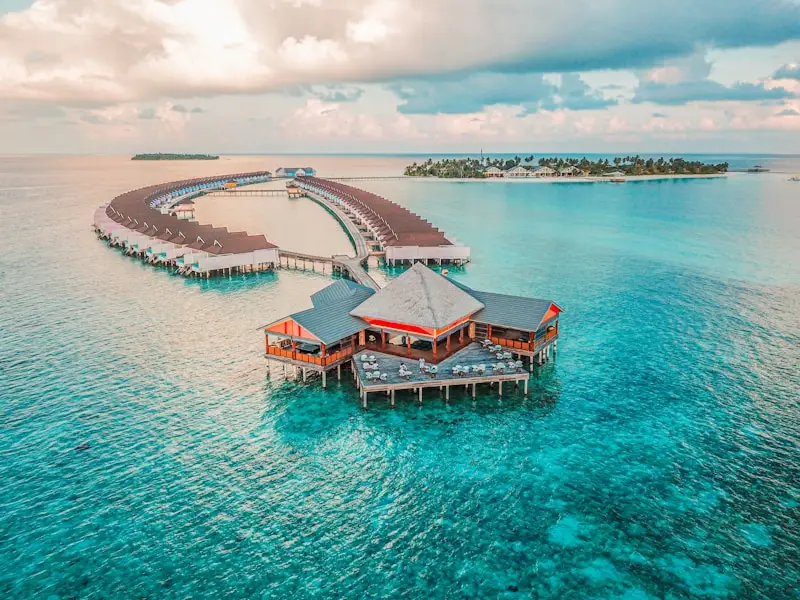
North Malé, Baa, Raa, Noonu—each atoll offers a different experience. Here's how to find your perfect match.
From above, the Maldives appears as a double chain of emerald beads scattered across an infinite blue cloth. These are the atolls—ring-shaped coral formations, each containing dozens of islands, each island different in character, accessibility, and appeal. For first-time visitors, especially honeymooners intent on finding the perfect setting for this once-in-a-lifetime trip, the choices can feel paralysing. North or south? Accessible or remote? Conservation-focused or leisure-oriented?
The truth is that there is no objectively "best" atoll—only the best atoll for you, given your priorities, your travel style, and the particular magic you're seeking. What follows is an atoll-by-atoll guide to help you navigate the archipelago and find your ideal island.
North Malé Atoll: The Classic Choice
North Malé contains Velana International Airport and thus serves as the gateway to the Maldives for most visitors. The atoll is the most developed in the country, home to both the capital city and a high concentration of resorts. For some couples, this accessibility translates to convenience; for others, it suggests crowds and compromised isolation.
The reality is more nuanced. Yes, the flight paths cross overhead more frequently here. But resorts like One&Only Reethi Rah and Velaa Private Island (technically in Noonu Atoll but accessed easily from here) have mastered the art of creating seclusion within reach. Transfer times are short—often under an hour by speedboat—meaning less travel fatigue and more honeymoon time.
Best for: Couples with limited time or those combining the Maldives with onward travel. First-time visitors who want reliable access and proven resorts. Those who value dining and nightlife options beyond their resort.
Proximity to civilisation need not compromise paradise—it merely makes paradise easier to reach.
South Malé Atoll: Marine Life Haven
Just below the capital atoll, South Malé offers similar accessibility with notably better marine life. The atoll hosts several Marine Protected Areas, and the diving and snorkeling here rank among the country's best. Resorts tend toward the established rather than the cutting-edge, but properties like COMO Cocoa Island and Naladhu Private Island deliver sophisticated experiences.
The house reefs in South Malé generally excel, with healthy coral coverage and abundant fish life. Several resorts sit near channels between atolls where currents bring nutrients and attract larger pelagics. For couples who prioritize underwater experiences, this atoll punches above its weight.
Best for: Snorkeling and diving enthusiasts who don't want to sacrifice accessibility. Couples seeking established resorts with proven track records. Those who want day-trip options to the capital.
Baa Atoll: The UNESCO Choice
In 2011, Baa Atoll became the Maldives' first UNESCO Biosphere Reserve, recognising its exceptional marine biodiversity. The atoll's crown jewel is Hanifaru Bay, where the largest gatherings of manta rays in the world occur between May and November. Swimming among dozens of feeding mantas remains one of the Indian Ocean's most profound wildlife experiences.
Resorts in Baa have embraced the conservation mandate, with many running active marine research programmes. Anantara Kihavah, Soneva Fushi, and Four Seasons Landaa Giraavaru all offer exceptional accommodation alongside serious environmental credentials. The transfer requires a seaplane—roughly 30 minutes—which adds both expense and spectacle to the journey.
Best for: Wildlife enthusiasts, particularly those hoping to encounter mantas. Couples who value conservation and sustainability. Those travelling during the southwest monsoon (May-November) when manta activity peaks.
Baa's protected waters offer something money cannot buy elsewhere: the reasonable expectation of encounters with giants.
South Ari Atoll: Whale Shark Central
If Baa is the manta capital, South Ari claims the whale shark throne. Year-round sightings of the world's largest fish have made this atoll famous among marine wildlife enthusiasts. The whale sharks patrol a relatively predictable route along the atoll's outer reef, allowing resorts to offer excursions with high success rates.
Beyond the whale sharks, South Ari offers excellent diving and snorkeling on pristine reefs. The atoll's relative remoteness—seaplane transfers run about 25 minutes—contributes to a genuine sense of escape. Resorts range from the ultra-luxury (Conrad Maldives Rangali Island, with its famous underwater restaurant) to the merely exceptional (LUX* South Ari Atoll).
Best for: Couples determined to swim with whale sharks. Those seeking remote-feeling destinations with developed infrastructure. Divers interested in channel dives with pelagic species.
Noonu Atoll: Ultra-Exclusive Escape
The northern atolls—Noonu, Raa, and beyond—remain relatively undeveloped, with fewer resorts and longer transfers. For honeymooners prioritizing absolute exclusivity, this remoteness becomes a virtue. When your seaplane lands after 45 minutes of flight over empty ocean, you've genuinely escaped the world.
Noonu's standout property is Velaa Private Island, a resort so committed to exclusivity that it limits island capacity and offers a private marina for each overwater villa. The aesthetic is contemporary rather than castaway, with world-class dining and a golf academy adding unexpected sophistication. The marine environment here has benefited from less development—house reefs thrive, and excursion sites feel genuinely pristine.
Best for: Privacy-obsessed couples willing to pay for genuine seclusion. Those seeking cutting-edge design rather than traditional Maldivian aesthetic. Golfers (Velaa has the Maldives' only course).
The Remote Southern Atolls
Below the equator, the southern atolls—Gaafu, Addu, and others—offer frontier territory. Fewer tourists, untouched dive sites, and a sense of genuine discovery reward those willing to make the journey. Transfers typically involve domestic flights to regional airports followed by speedboat rides, adding complexity but also adventure.
Properties in the south often emphasize sustainability and community connection. Ayada Maldives in Gaafu Dhaalu and Shangri-La Villingili in Addu provide luxury accommodation while supporting local conservation initiatives. The diving here rivals anywhere in the country, with sites rarely visited and reefs still recovering from fewer pressures.
Best for: Adventurous couples willing to embrace longer journeys. Serious divers seeking unexplored sites. Those interested in Maldivian culture and local community connections.
Making Your Choice
When choosing your atoll, consider first your priorities. If wildlife encounters rank highest, Baa or South Ari deliver. If seclusion matters most, look north to Noonu or south below the equator. If convenience and reliability take precedence—especially for first-time visitors—the Malé atolls offer proven pleasures with minimal fuss.
Consider also the season. The northeast monsoon (December through April) brings dry weather and calm seas to the eastern atolls; the southwest monsoon (May through November) shifts good conditions westward while bringing mantas to Baa. Neither season is objectively better, but matching your atoll choice to conditions maximizes your experience.
Finally, remember that every resort creates its own microworld. A beautifully designed property with an exceptional house reef can make any atoll magical. Conversely, a disappointing resort can squander the advantages of even the most pristine location. Research specific properties at least as carefully as you research atolls. The goal is not to find the perfect atoll but the perfect honeymoon—and that depends on far more than geography.