Siem Reap offers far more than temple ruins. This guide reveals hidden cultural experiences, romantic dinners at world-class restaurants, and how to balance spiritual discovery with genuine relaxation in Cambodia's most sophisticated destination.
The tuk-tuk driver cuts the engine in front of a silk workshop where five women sit cross-legged at wooden looms, their hands moving in practiced rhythm. This is Siem Reap on a Tuesday morning: the temples haven't opened yet, and you're watching artisans revive a craft nearly lost during decades of upheaval. Later, you'll stand before Angkor Wat. But first, there's this quiet room, the click of shuttles, the smell of dyed thread drying in the sun.
Siem Reap has become something more complicated than its most famous monument. The city now holds French colonial villas converted into wine bars, night markets selling everything from silk scarves to fried tarantulas, and restaurants where Michelin-trained chefs serve courses between opera arias. The temples remain the gravitational center, but the city itself has developed its own pull.
Fine Dining: Where Culinary Excellence Meets Romance
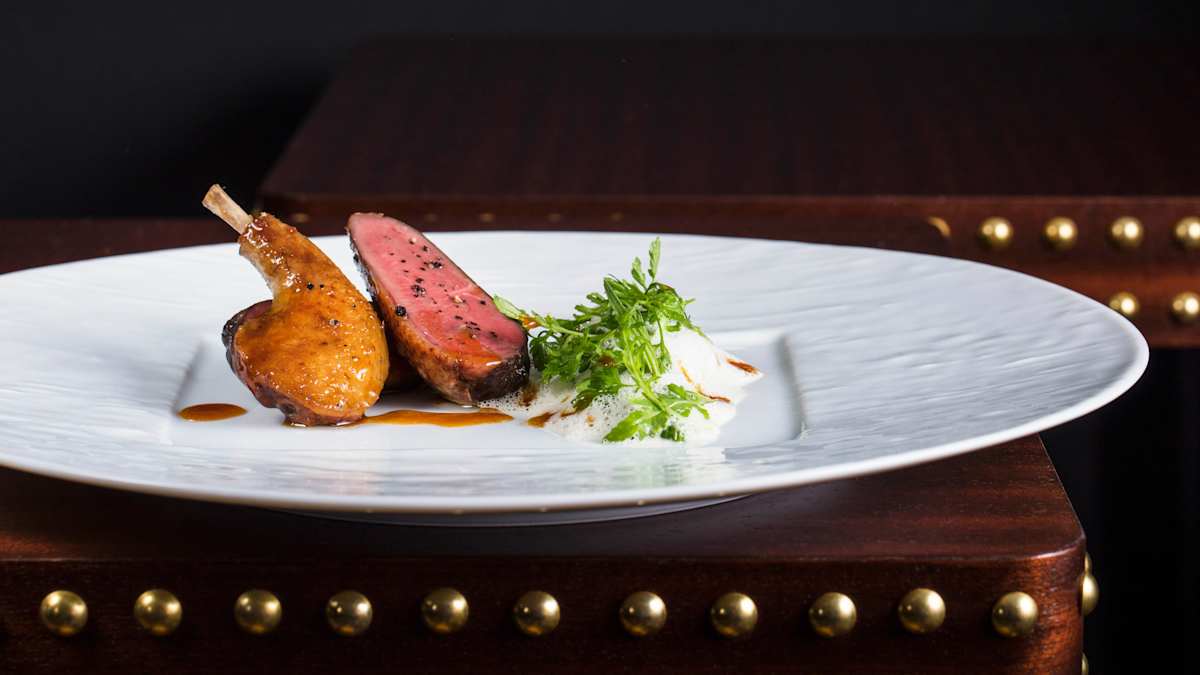
Siem Reap's dining scene has quietly matured beyond the backpacker cafes that still line Pub Street. The city now attracts chefs who trained in Europe's finest kitchens and chose to build something here, away from established circuits. These restaurants understand that couples arrive after long flights and longer temple days, seeking experiences that restore rather than merely feed.
In Monaco, Les Ambassadeurs by Christophe Cussac delivers the kind of two-Michelin-starred precision that becomes a template for what's possible. The lobster lasagne here has earned near-legendary status among guests who return specifically for that dish. Jacques Garcia designed the interiors with enough warmth that theatrical elements like the bread trolley feel celebratory rather than performative. The Chef's Table places you directly in the creative process, watching how Cussac's Mediterranean techniques transform local ingredients into courses that guests describe as gastronomic magic. Service operates at that level where attentiveness never crosses into intrusion.
Paris offers a different approach at Bel Canto Paris - Hotel de ville, where the Seine flows past windows framing Notre-Dame and opera singers move between tables performing Verdi and Puccini. A quartet of classically trained voices—soprano, mezzo-soprano, tenor, and baritone—deliver arias between courses of French cuisine that favors elegance over complication. One couple watched a proposal unfold mid-performance, the soprano sustaining a high note while a man knelt. The veal here receives consistent praise for its cooking precision, but the experience matters more than any single dish. This is dining as theater without the food becoming secondary.
Restaurant L'Estevão in Pernes-les-Fontaines operates at a more intimate scale, where Chef Charlène Estevão runs an 18-seat dining room with market-driven tasting menus. Guests return for the progression—amuse bouche through fish and meat courses—that demonstrates technical skill without announcing it. The 9.5 rating comes from diners who understand the difference between ambitious cooking and showmanship. Service here strikes that balance where professionalism doesn't preclude warmth. One reviewer noted finding this restaurant before the crowds arrive, which speaks to both its quality and its current moment of being discovered rather than established.
The Mediterranean views from Mareluna in Théoule-sur-Mer stretch across the Bay of Cannes from a terrace where Chef Francesco Fezza's Michelin-starred cuisine meets subtle Asian influences. The setting occupies a converted 17th-century soap factory, with rattan furniture under stars and a vegetarian tasting menu that earned specific praise from a diner who usually struggles to find creativity in plant-based fine dining. Couples book tables for consecutive nights, drawn back by cooking that makes repetition feel like continuation rather than redundancy. The polished service enhances evenings where the bay provides a constantly changing backdrop.
On the Amalfi Coast, Bluh Furore operates within the Furore Grand Hotel, where Executive Chef Vincenzo Russo works under the mentorship of three-Michelin-starred Enrico Bartolini. The minimalist dining room frames Mediterranean views through floor-to-ceiling windows, and three tasting menus showcase contemporary Campanian cuisine with ingredients sourced from the surrounding region. The five-course seafood menu earned the restaurant its Michelin star, though guest experiences vary—some find the seasoning precise, others note inconsistency. What remains constant is the setting: one of the coast's most visually arresting backdrops.
The best meals in Siem Reap happen when you've already spent six hours among temple stones and need something to remind you why human civilization matters beyond monuments.
Lesser-Known Temples and Spiritual Moments
Pre Rup sits four kilometers from Angkor Wat, built in 961 AD from red brick that glows almost crimson at sunset. You'll find maybe twenty people here at golden hour instead of the hundreds crowding the main temple's western causeway. The pyramid temple rises in three tiers, with staircases steep enough that you climb using both hands and feet. At the top, the view extends across rice fields and forest canopy punctuated by distant temple spires.
Banteay Samré occupies a different aesthetic entirely: stone the color of warm honey, intricate carvings still sharp after 900 years, and a layout compact enough to understand in a single visit. The temple sits 18 kilometers east of Siem Reap proper, which means tour buses skip it in favor of more famous sites. Go at 8 AM. You'll have galleries to yourself, with morning light slanting through doorways to illuminate devatas whose features remain remarkably detailed.
Ta Som combines the tree-root aesthetic that made Ta Prohm famous with far fewer visitors competing for photographs. A strangler fig grows through the eastern gopura, its roots creating a natural frame around the doorway that photographers wait in line for at dawn. The temple itself measures only 240 meters across, but the central sanctuary contains carvings of apsaras that reward close examination. Local guides share stories about the Khmer Empire's Buddhist king Jayavarman VII, who commissioned this temple, that textbooks condense into single paragraphs.
Tonle Sap Lake: Life on Water
The boat departs at 5:45 AM, motoring through channels that connect Siem Reap to Southeast Asia's largest freshwater lake. Within thirty minutes, you've reached floating villages where houses rise on six-meter stilts and corner stores drift with the current. This is Kampong Phluk during the wet season, when water levels climb high enough that children paddle dugout canoes to school.
The scale becomes apparent when your boat reaches open water: Tonle Sap covers 16,000 square kilometers during peak flood season, supporting fishing communities that have lived on these waters for generations. You'll pass fish farms where catfish churn in submerged nets, crocodile farms that supply leather to Phnom Penh markets, and floating Buddhist temples that serve congregations distributed across square kilometers of water.
Tours typically include school visits that feel staged until you realize these institutions genuinely operate on pontoons, moving locations as water levels change throughout the year. The return journey happens in full daylight, revealing details invisible at dawn: women selling Coca-Cola from floating shops, men repairing fishing nets on front porches, satellite dishes mounted to stilts bringing television to homes without roads.
The best operators employ guides who grew up in these communities and can explain how lake ecosystems support livelihoods that government statistics struggle to capture. Prices run $30-40 per person for half-day tours.
Silk Weaving and Artisan Workshops
The National Silk Center sits seven kilometers north of Siem Reap, in a compound where mulberry trees feed silkworms and wooden looms produce fabric using techniques that nearly disappeared between 1975 and 1979. Weavers here work four days to produce a single meter of silk, their hands moving in patterns learned over years of apprenticeship. The facility operates as both workshop and training center, with young women learning a craft their grandmothers practiced before the Khmer Rouge years.
Hands-on lessons run two hours and cost $25 per person. An instructor sets you up at a simple floor loom, demonstrates the shuttle motion, then watches as you attempt to maintain consistent tension across warp threads. The resulting fabric looks nothing like the pieces hanging in the showroom, but the process reveals why silk prices climb so high: this is slow work requiring genuine skill.
Khmer Silk operates on a similar model closer to town, with additional focus on natural dyeing processes using indigo, turmeric, and stick lac. The shop sells finished scarves, wall hangings, and fabric by the meter at prices reflecting actual production costs rather than tourist markups. A queen-sized silk bedspread here runs $300-400, which sounds steep until you watch someone work the loom for an afternoon.
Purchasing directly from these workshops channels money toward artisan wages and training programs. The fabrics themselves travel well, folding into luggage without creasing, and carry enough visual weight to work as both souvenir and functional textile.
French Colonial Architecture and Historic Sites
The French Quarter clusters around Street 9, where colonial-era buildings in various states of renovation house wine bars, boutique hotels, and cafes serving baguettes with Cambodian fillings. These structures date from the 1920s and 30s, when French administrators governed Indochina from air-conditioned offices while Khmer laborers cleared jungle from temple complexes. The architecture blends European proportions with tropical adaptations: high ceilings, deep verandas, shuttered windows designed for cross-ventilation.
Wat Botum Park occupies space near the old governor's mansion, though the building itself has been converted to government offices closed to visitors. The park attracts morning runners and evening food vendors, with benches shaded by trees planted during the colonial period. Walking tours led by local historians connect these sites to broader narratives about cultural exchange, exploitation, and the complicated legacy of French rule in Cambodia.
Street art has emerged as unexpected commentary on this history. Murals depicting traditional apsara dancers share walls with pieces addressing contemporary social issues. The renovation boom transforming colonial buildings into boutique properties creates visual collisions where heritage preservation meets commercial development. These tensions play out in paint and plaster across the quarter.
Photography here works best in late afternoon when slanted light emphasizes architectural details: decorative molding, weathered shutters, tropical plants overtaking courtyards. Some buildings remain genuinely derelict, which raises questions about preservation priorities in a city where investment flows primarily toward hotel development.
Evening Culture: Night Markets and Nightlife
Pub Street after dark operates at a volume that carries three blocks. This pedestrian strip has evolved from pure backpacker territory into something more varied, with cocktail bars occupying second-floor spaces above dollar-beer joints. The energy peaks around 10 PM, when crowds spill between venues and street performers work the flow for tips. It's loud, sometimes aggressively so, but contains enough genuine local participation that it avoids pure tourist theater.
The night markets radiating from Pub Street sell identical souvenir inventory—hand-carved elephants, silk scarves, knock-off North Face jackets—but also house food stalls worth navigating the crowds to reach. Vendors grill skewers of pork and chicken over charcoal, ladle curry into banana leaf boats, and deep-fry spring rolls to order. A full meal costs $4-6 if you eat at plastic tables rather than attempting to walk and consume simultaneously.
Live music venues have multiplied in recent years, with Cambodian musicians playing everything from traditional chapey dong vang to covers of Western pop hits. These spots cluster around Street 7 and Sivatha Boulevard, operating at more reasonable decibel levels than Pub Street proper. Cover charges rarely exceed $5, and performers often sit for drinks between sets, making the atmosphere more participatory than performative.
Rooftop bars provide physical and psychic distance from street-level intensity. The Miss Wong cocktail bar occupies a converted shophouse with a terrace overlooking night market chaos, serving drinks mixed with actual technique rather than bucket-brigade efficiency. Prices climb to $8-10 per cocktail, which feels almost reasonable given the refuge provided.
Planning Your Trip: Practical Foundations
November through February delivers consistent 25-30°C days and minimal rainfall. This is peak season, which means temple crowds and inflated accommodation prices, but also means you can plan outdoor activities without contingency weather plans. March and April climb into the high 30s with humidity that makes temple climbing genuinely exhausting by noon. The monsoon runs May through October, with September bringing the heaviest rainfall.
Siem Reap International Airport receives direct flights from Bangkok (one hour), Singapore (two hours 30 minutes), and Ho Chi Minh City (one hour 15 minutes). Most travelers connect through these hubs rather than flying direct from Europe or North America. The airport sits 40 minutes from central Siem Reap by taxi, with fixed rates around $15-20 depending on negotiation skill.
Visa on arrival costs $30 for most nationalities and processes in 15-20 minutes if you arrive with a passport photo and exact cash. E-visas approved online before departure cost $36 and eliminate airport queues. Both grant 30-day stays.
Budget breakdown for mid-range travel: accommodation runs $40-80 per night for comfortable hotels with pools, meals cost $15-25 per person at decent restaurants, temple passes are $37 for one day or $62 for three days, and private drivers charge $30-40 for full-day temple tours. Expect to spend $100-150 per person daily including lodging, or $200+ if you upgrade to luxury properties and fine dining.
Tuk-tuks remain the primary transport mode, with trips across town costing $2-5 depending on distance. Many visitors hire drivers for multi-day temple tours, establishing relationships that make logistics simpler than negotiating each morning. Bicycles rent for $3-5 daily and work well for exploring town, though temple distances exceed comfortable cycling range for most people.
US dollars circulate alongside Cambodian riel, with most transactions defaulting to dollars and change given in riel at a fixed rate of 4,000 riel per dollar. ATMs dispense dollars and charge $5-6 per withdrawal. Credit cards work at upscale restaurants and hotels but rarely elsewhere.
Health precautions include hepatitis A and typhoid vaccinations, with malaria prophylaxis optional depending on rural travel plans. Travel insurance should cover medical evacuation, as Siem Reap hospitals handle routine issues but serious cases require transport to Bangkok. Bottled water costs less than $1 per liter and prevents the gastrointestinal issues that plague visitors who drink from taps.
Siem Reap rewards the kind of travel where you build rest days into temple schedules and leave room for discoveries that guidebooks can't anticipate.
The city functions best when approached not as a temple-viewing platform but as a place where Cambodian culture continues evolving in complicated relationship with its past. That means balancing Angkor Wat sunrises with afternoons watching silk weavers, evenings at rooftop bars with mornings on Tonle Sap, and the understanding that the most memorable moments often happen in transition between planned activities. Book your temples, reserve your restaurants, then leave enough unscheduled time to follow whatever pulls your attention when you arrive.